Catania Airport Delays: The Etna Backlog and What Happens When Flights Restart
Catania has now been shut for five days, the longest closure since 2002, with 36% of flights cancelled and over 600 diverted. Here is why delays will outlast the closure, and what you are actually owed.
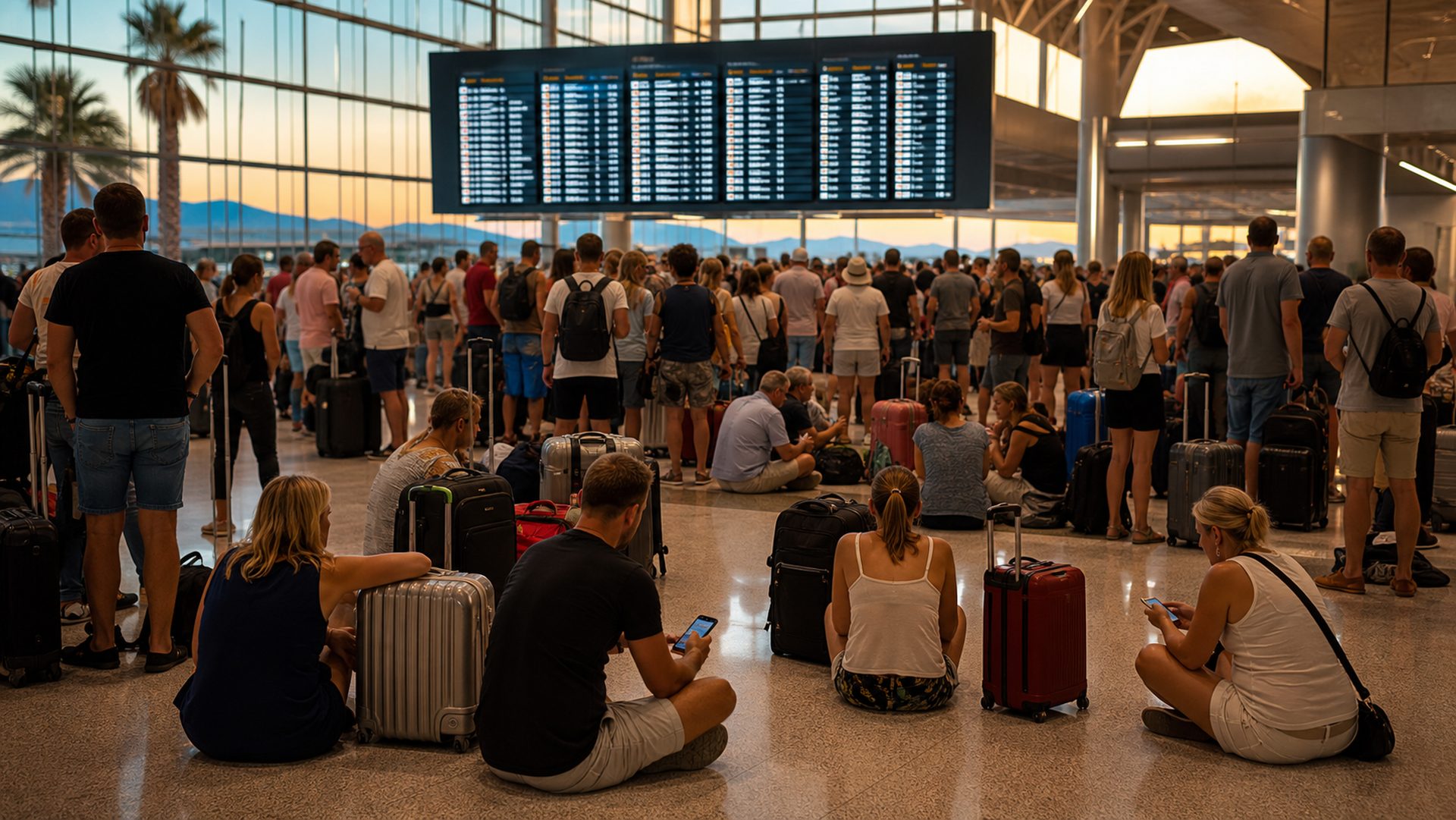
Catania Fontanarossa Airport has been closed for five straight days, the longest emergency at Sicily's biggest airport since 2002. Volcanic ash from Mount Etna has kept the airspace shut, and airport operator SAC has confirmed that arrivals and departures are suspended until 02:00 on Saturday 15 August.
The closure itself is only half the story. When an airport of this size reopens after five days down, the aircraft, crews and passengers are all in the wrong places. That means delays, not just cancellations, will define the next few days. Here is what to expect, and how to keep track of it.
How Bad Has the Disruption Been?
Between 6 and 12 August, roughly 36% of the 1,974 scheduled flights at Catania were cancelled outright. More than 600 flights were diverted to other airports, principally Palermo, along with Trapani, Comiso and Lamezia Terme on the Italian mainland. Around 700 flights in total have been lost across Sicily.
It has landed at the worst possible moment. This is Ferragosto week, the peak of the Italian domestic holiday season, layered on top of the busiest fortnight of the UK school holidays.
Our own live tracking of Catania on 14 August recorded 92 flights in the schedule, of which 48 were cancelled and 44 were still listed as operating. Notably, almost none were logged as merely delayed. That is the signature of an airspace closure rather than an ordinary bad day: airlines do not hold flights, they scrap them. Ryanair was the most affected carrier with 23 cancellations, and Rome Fiumicino was the worst hit route.
Why Delays Will Follow the Reopening
Stop overpaying for airport parking. Compare prices across all UK airports and save up to 60% when you book in advance.
Volcanic ash is dangerous because it is abrasive and melts inside a hot jet engine, where it can coat turbine blades and cause a flameout. Boris Behncke of Italy's National Institute of Geophysics and Volcanology has been clear that ash ingestion can stall an engine outright, which is why aviation authorities take a red alert so seriously and why nobody flies through it.
Once the alert level drops and the airport reopens, three things cause delays to pile up:
- Aircraft are out of position. A jet that got stuck in Palermo or Trapani has to be repositioned before it can operate its next Catania rotation, and that empty flight is not carrying passengers.
- Crews are out of hours. Flight crew are bound by strict duty limits. Crews who have been sitting in hotels for days may not be legally able to operate the first available flight.
- The airport is running above capacity. Airlines add recovery flights, often overnight, on top of the normal schedule. Stand space, ground handlers and baggage systems all become the bottleneck.
Expect knock-on delays for several days after operations restart, easing gradually rather than all at once.
Tracking It Live
Do not rely on the schedule you were given when you booked. Check the live position before you set off:
- Catania departures board for real-time status on outbound flights
- Catania arrivals board to see whether your inbound aircraft has actually made it to Sicily
- Catania cancelled flights tracker for a live list of what has been scrapped today, broken down by airline and route
- Catania cancellation history for how the picture has developed day by day
- Catania weather and conditions for local conditions at the airport
If your flight was diverted or rebooked through the west of the island, our Palermo Airport guide and its departures board cover the main alternative. Our full Catania Fontanarossa guide has terminal, airline and transport detail.
For the background on how the closure unfolded, see our earlier report on the Etna eruption and the Catania cancellations.
Your Rights: Cancellations Versus Delays
This is the part that catches people out, because the two are treated differently.
Cancellations caused by the ash
Flying early? Don't risk the traffic. Stay minutes from the terminal with park & fly packages included.
A volcanic eruption is an extraordinary circumstance under EC 261 and the UK equivalent, UK261. That means no cash compensation is payable for a cancellation caused directly by the ash cloud. The airline is still legally obliged to offer you a refund or a rerouting, and it still owes you a duty of care while you wait: meals and refreshments appropriate to the delay, hotel accommodation if you need an overnight stay, transport to and from that hotel, and a means of communication. That duty does not expire because the cause was a volcano.
Delays during the recovery
This is more nuanced. If your flight is delayed several days after the airspace reopens, and the cause is the airline's own recovery scheduling rather than the ash itself, the extraordinary circumstances defence becomes much harder for the airline to justify. Each case turns on the specific reason logged for that specific flight. It is worth keeping your own record: photograph the departure board, keep boarding passes, and note the reason you were given.
If you are out of pocket for hotels or meals that the airline should have covered, keep every receipt. Reasonable expenses are recoverable even when compensation is not.
Practical Advice Right Now
- Check before you travel to the airport. Five days of closure means schedules are being rewritten hourly.
- Do not book your own replacement flight before speaking to the airline unless you are prepared to fund it yourself. Your right is to rerouting, and if you self-rebook you may lose it.
- Consider the alternatives. Trenitalia has increased services on the Palermo to Messina to Catania line specifically to move stranded passengers. If you can get to Palermo, you have more options.
- Beware of surge pricing. Italian consumer body Codacons has raised the possibility of an investigation into taxi and car hire prices around Catania during the closure. Agree the fare before you get in.
- Travel insurance. Check whether your policy covers travel disruption. Many do, and a volcanic closure is a common inclusion.
The Bigger Question
Italy's Civil Protection Minister Nello Musumeci has used the closure to reopen a debate he first raised in 1999: whether it is sensible to have Sicily's principal airport sitting directly beneath Europe's most active volcano. Fontanarossa is around four kilometres from central Catania and squarely in Etna's path when the plume drifts south. Nobody is going to move an airport quickly, but five days of closure in peak season will keep that conversation going.
For now, the practical answer is simpler. Watch the boards, know your rights, and give yourself more time than the schedule suggests.
Written by
WhichTerminal Team
Related Articles
 📰 Airport News
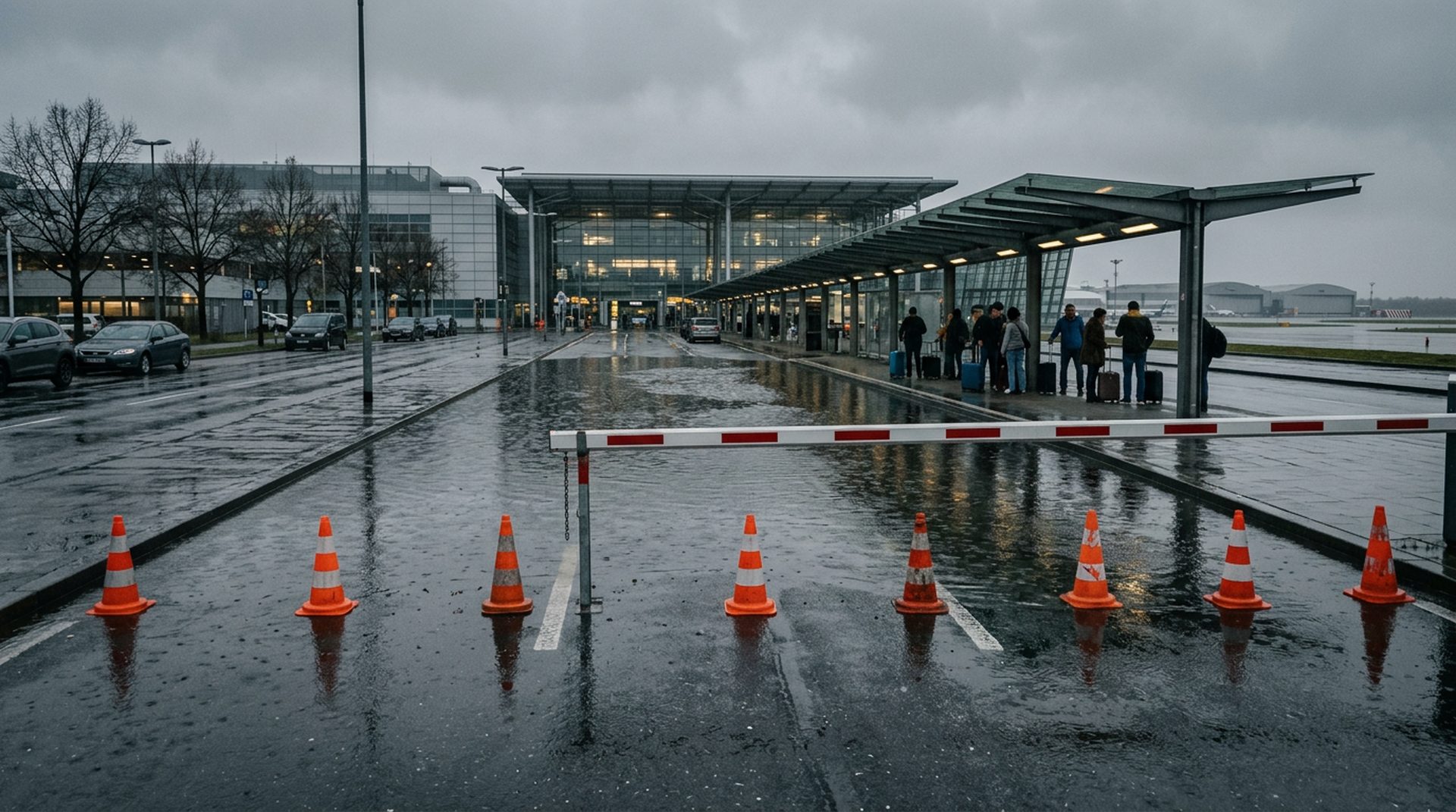
Heathrow Flooding: Road Access to Terminals 2 and 3 Restricted, Passengers Told to Use Rail
Heathrow has warned that road access to Terminals 2 and 3 is restricted after flooding in the central terminal area. Flights are operating normally, but passengers are told not to travel by road. Here is how to get there, which airlines are affected and where you stand if you miss your flight.
 📰 Airport News
UK Airport Passenger Traffic, May 2026: Regions Lead the Growth as Gatwick Slips
Official CAA figures for May 2026 show UK passenger numbers still climbing, with Edinburgh, Newcastle and Liverpool leading the majors and Bournemouth and Cardiff posting the fastest growth. London Gatwick remains the only large airport in decline. Here is the full breakdown, plus which airports cancel the most flights.
 📰 Airport News
Wetherspoon Opening Date Confirmed at Manchester Airport: The Belle Vue Comes to Terminal 2
Manchester Airport's first ever JD Wetherspoon pub, The Belle Vue, is set to open in the Terminal 2 departures lounge on 15 September. Here is what to expect from the sport-themed pub, why it is named after the city's historic showground, and which airlines fly from Terminal 2.