Heathrow Flooding: Road Access to Terminals 2 and 3 Restricted, Passengers Told to Use Rail
Heathrow has warned that road access to Terminals 2 and 3 is restricted after flooding in the central terminal area. Flights are operating normally, but passengers are told not to travel by road. Here is how to get there, which airlines are affected and where you stand if you miss your flight.
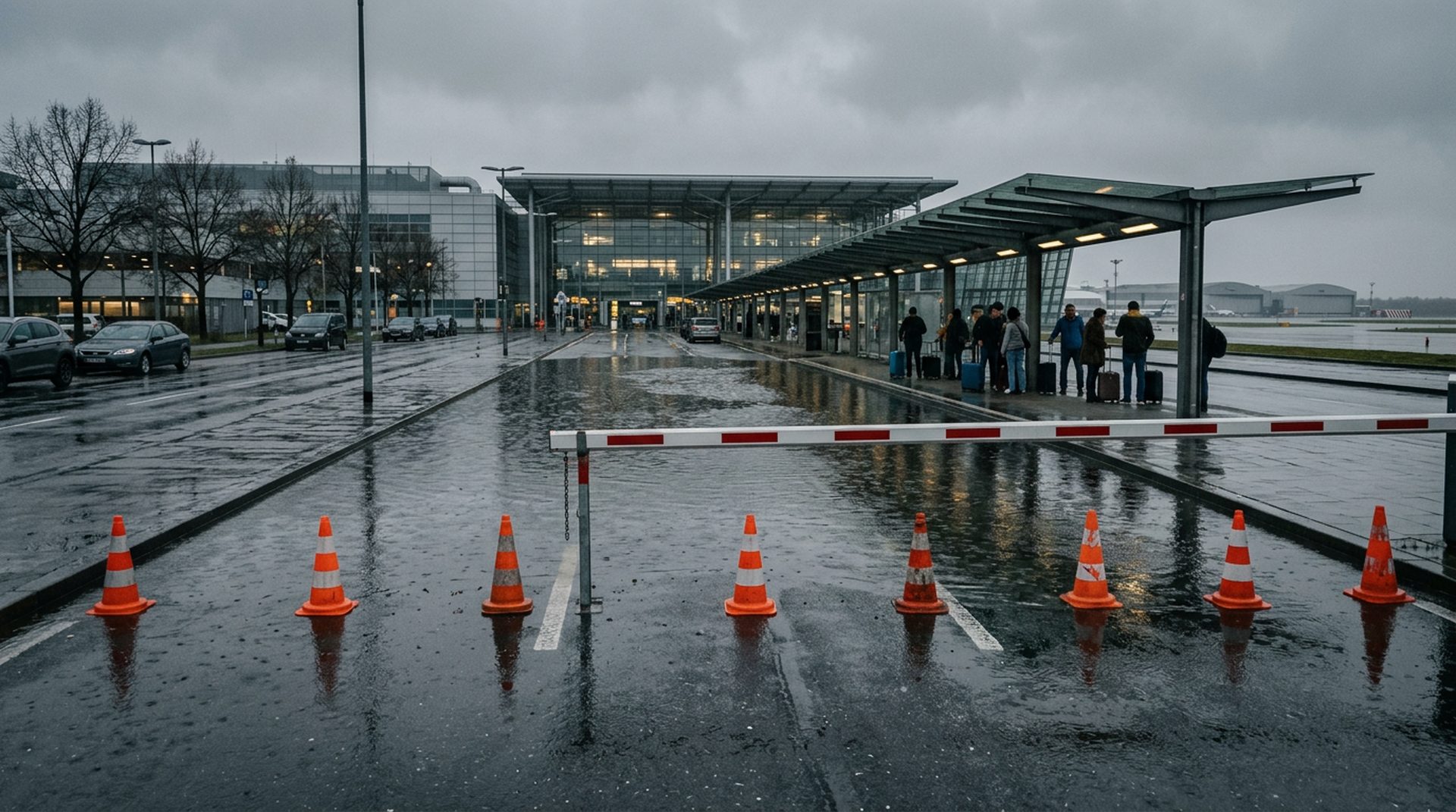
Heathrow Airport has warned that road access to Terminals 2 and 3 is restricted after flooding in the central terminal area. In a notice published on its own website, the airport says passengers travelling to or from either terminal today must not travel by road, and should use rail services instead.
This is a landside problem rather than an airside one. Runways are open and aircraft are operating. The difficulty is simply getting to and from the two terminals that sit in the middle of the airport, and that is enough to make people miss flights if they set off expecting a normal journey.
What Heathrow Has Actually Said
The wording of the airport's own alert is worth reading carefully, because it is more specific than most disruption notices:
"Flooding in the central terminal area has resulted in on-going road closures restricting access to Terminals 2 and 3. Passengers travelling to or from either of these terminals today must not travel by road. Passengers are strongly advised to use Heathrow Express, Elizabeth Line and Piccadilly Line rail services where possible. Any passengers that must travel by car must use Park and Ride, head to Terminals 4 or 5 and take free rail services from there, or change at local rail stations."
Three things stand out. First, "must not travel by road" is unusually blunt for an airport advisory. Second, all three rail options into the central terminal area are running. Third, Heathrow is explicitly offering a workaround for drivers: get to Terminal 4 or Terminal 5, park there, and use the free inter-terminal rail transfer to reach Terminals 2 and 3.
Which Terminal Are You Flying From?
Stop overpaying for airport parking. Compare prices across all UK airports and save up to 60% when you book in advance.
This only matters if your flight goes from Terminal 2 or Terminal 3. Between them those two terminals handle the large majority of Heathrow's non-British Airways long-haul traffic, so a great many passengers are affected.
Terminal 2 is the Star Alliance home at Heathrow. Airlines there include Lufthansa, United Airlines, Singapore Airlines, Air Canada, SWISS, Aer Lingus, TAP Air Portugal, Austrian Airlines, Brussels Airlines, Icelandair, Aegean, Eurowings, Vueling, Air India, Thai Airways, Ethiopian Airlines, EgyptAir and LOT Polish Airlines.
Terminal 3 is the busiest of the two for oneworld and unaligned carriers. Airlines there include Virgin Atlantic, Emirates, Qatar Airways, American Airlines, Delta Air Lines, Cathay Pacific, Finnair, Japan Airlines, Korean Air, Qantas, Saudia, Oman Air, Malaysia Airlines, SriLankan Airlines, Royal Air Maroc, Kenya Airways, EVA Air, IndiGo, Loganair and some British Airways services.
If your flight is with Air France, KLM, Etihad Airways, Turkish Airlines or TUI Airways, you are at Terminal 4. If you are flying most British Airways routes or Iberia, you are at Terminal 5. Neither terminal is affected by the road closures, though the central area congestion may still slow the surrounding road network.
Always check your own boarding pass, because airlines do move between terminals. Our Heathrow terminal guide lists the current allocation for every airline at the airport.
How to Get There Today
The three rail routes into Heathrow Terminals 2 and 3 station all serve the central terminal area directly, and none of them touch the flooded roads.
Elizabeth line is the cheapest of the three, running from Paddington through central London and out to the airport, with contactless and Oyster accepted. Heathrow Express is the fastest from Paddington at around 15 minutes, but costs considerably more unless you book in advance. The Piccadilly line is the slowest but connects to a much wider spread of London and is covered by a standard Tube fare.
All three deposit you underneath the central terminal area, with covered walkways up into both Terminal 2 and Terminal 3. Our Heathrow getting here guide has the full route detail, journey times and fares for each option.
If you genuinely cannot avoid driving, follow Heathrow's own advice: aim for Terminal 4 or Terminal 5, park there, and take the free inter-terminal rail transfer into the central area. That transfer is free of charge between all Heathrow terminals and takes only a few minutes. Anyone with a booking in a central terminal area car park should contact their operator before setting off, and our Heathrow parking guide covers which car parks sit where.
Whichever way you travel, leave far more time than you normally would. Road closures in the central terminal area push traffic onto the perimeter roads and the tunnel approaches, so even journeys to Terminals 4 and 5 are likely to be slower than usual.
Are Flights Being Cancelled?
Not in any significant numbers so far. Our own tracking for Heathrow on 15 August recorded 1,305 flights, with 134 running more than 15 minutes late and only 3 cancelled, at an average delay of just under 30 minutes across the delayed services. For comparison, the previous day saw 282 delayed flights out of 1,366, so the operation is currently running better than it was on Friday.
That is the pattern you would expect from a landside incident. Water on the approach roads does not stop aircraft taking off. The risk is not that your flight is cancelled, it is that you are still sitting in stationary traffic when the gate closes.
You can watch the position yourself on our live Heathrow departures board and Heathrow arrivals board, both of which update through the day. Anything that does get pulled will appear on our Heathrow cancelled flights page, and the longer term picture is on our Heathrow cancellation statistics.
Where You Stand If You Miss Your Flight
Flying early? Don't risk the traffic. Stay minutes from the terminal with park & fly packages included.
This is the uncomfortable part. If your flight departs on time and you are not on it because you were stuck on a flooded road, that is a missed flight rather than a delayed one, and the airline owes you nothing. Compensation rules under UK261 cover delays and cancellations caused by the airline. They do not cover passengers who fail to reach the gate.
Most airlines operate some form of missed departure or flat rate rebooking fee, but it is discretionary and it is rarely cheap on a long haul ticket. Travel insurance policies sometimes include missed departure cover, usually with a requirement that you allowed a reasonable amount of time for the journey, which is precisely why the airport's advisory matters. Setting off by road today after being told not to would not help any claim.
If your flight itself is delayed or cancelled, that is a different matter and the usual rules apply. Our flight compensation guide sets out what you are entitled to and how to claim it.
The practical advice is simple. Go by rail, go early, and if you are already running late, ring your airline before you arrive rather than after you have missed the desk.
What Caused It
Heathrow has described the cause only as flooding in the central terminal area, and says its teams are working to resolve the situation as quickly as possible. It has not, at the time of writing, said whether this is weather related or the result of a burst water main.
Heathrow has form on both. A burst water main near Terminals 2 and 3 on 30 May 2026 flooded the area badly enough to knock out rail signalling, suspending Elizabeth line and Heathrow Express services for several hours at a point when the Piccadilly line was already closed for engineering work. Earlier this month, on 10 and 11 August, a water leak in the tunnel between Hayes and Harlington and Terminals 4 and 5 forced services onto a single line and caused two days of rail disruption before being cleared.
The difference today is that rail is the solution rather than the problem. All three rail routes are running, which is why the airport is pushing passengers onto them so firmly.
Flying From London Another Way
If you are still booking and want to steer clear of the central terminal area entirely, the other London airports are all operating normally. Live boards are available for Gatwick, Stansted, Luton and London City.
The Short Version
Terminals 2 and 3 are open and flights are operating, but do not drive to them today. Take the Elizabeth line, Heathrow Express or Piccadilly line. If you must drive, park at Terminal 4 or Terminal 5 and use the free rail transfer across. Leave extra time either way, and check the live boards before you set off, because the one thing an airport advisory cannot tell you is whether your particular flight is still running to schedule.
We will update this page as Heathrow issues further information.
Written by
WhichTerminal Team
Related Articles
 📰 Airport News
UK Airport Passenger Traffic, May 2026: Regions Lead the Growth as Gatwick Slips
Official CAA figures for May 2026 show UK passenger numbers still climbing, with Edinburgh, Newcastle and Liverpool leading the majors and Bournemouth and Cardiff posting the fastest growth. London Gatwick remains the only large airport in decline. Here is the full breakdown, plus which airports cancel the most flights.
 📰 Airport News
Wetherspoon Opening Date Confirmed at Manchester Airport: The Belle Vue Comes to Terminal 2
Manchester Airport's first ever JD Wetherspoon pub, The Belle Vue, is set to open in the Terminal 2 departures lounge on 15 September. Here is what to expect from the sport-themed pub, why it is named after the city's historic showground, and which airlines fly from Terminal 2.
 📰 Airport News
Manchester Airport ATC Disruption: What Passengers Were Told on 8 September 2026
Manchester Airport issued two passenger updates during the 8 September 2026 air traffic control failure. Here is exactly what the airport said, what it means for your flight, and your refund and care rights.