The Schengen 90/180-Day Rule Explained (Plus Our Free Calculator)
Confused by the Schengen 90/180-day rule? We explain how the rolling window works for UK travellers and introduce our free calculator that tracks your allowance and tells you when you regain days.
We have built a brand-new, completely free tool to take the stress out of one of the most confusing parts of European travel: the Schengen 90/180-day rule. If you are a UK passport holder taking regular trips to Europe, our Schengen 90/180 Day Calculator shows you exactly how many days you have left - and when you get them back.
Why the 90/180 rule catches people out
Since Brexit, British citizens travel to the Schengen Area as visa-exempt visitors. That means you can spend a maximum of 90 days in any rolling 180-day period across the whole zone - not per country. It is a rule that sounds simple until you try to work it out on a calendar, and getting it wrong can mean fines, being turned away at the border, or even an entry ban.
The part that trips most people up is the word rolling. The 180-day window is not a fixed block that resets on a set date. Instead, on any given day, the authorities look back over the previous 180 days and add up every day you spent inside the Schengen Area. If that total is more than 90, you have overstayed.
How our calculator works
Stop overpaying for airport parking. Compare prices across all UK airports and save up to 60% when you book in advance.
Rather than counting on your fingers, you simply add each of your trips with an entry date and an exit date. The calculator then does the hard part for you:
- Current status - a clear “Compliant” or “Overstay risk” verdict for any date you choose.
- Days remaining - how many of your 90 days are still available on your chosen check date.
- Longest stay from today - the maximum number of consecutive days you could remain in the zone right now without breaching the limit.
- When you regain days - the next date older trips drop out of the back of the 180-day window, topping your balance back up.
Both your entry and exit days count as days spent in the Schengen Area, which is exactly how border officials calculate it. Overlapping trips are handled automatically, and the tool correctly accounts for leap years too.
A worked example
Say you spend all of June and July in Spain - that is roughly 61 days. In September you take a two-week trip to Italy. The calculator keeps a running total across both trips and warns you before a planned third trip would push you past 90 days. It also tells you the exact date your June days start “falling off” the 180-day window, so you know when it is safe to travel again.
Which countries count?
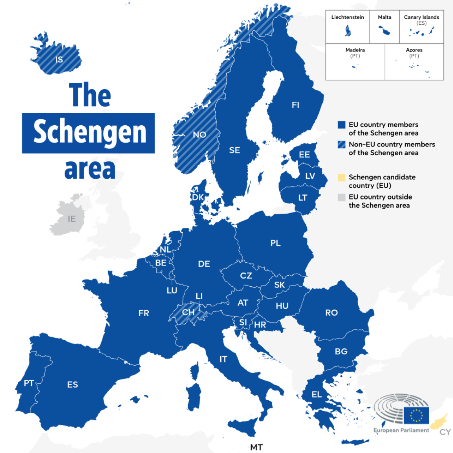
The Schengen Area covers most of the EU plus a few extra countries such as Switzerland, Norway and Iceland. Crucially, the days are shared across the entire zone - hopping from France to Germany to Italy does not reset anything. Note that Ireland is not in the Schengen Area, so time spent there does not count towards your 90 days.
Your data stays with you
Flying early? Don't risk the traffic. Stay minutes from the terminal with park & fly packages included.
There is no sign-up and no account required. Your trip details are saved privately in your own browser, so they are still there when you come back - but they never leave your device.
Try it now
Whether you are planning a long summer in the sun, splitting time between a holiday home and the UK, or simply want peace of mind before your next city break, give it a go: open the Schengen 90/180 Day Calculator.
This tool is provided for general guidance only and does not constitute legal or immigration advice. Always confirm your status with the official authorities before you travel, as border control has the final say.
Written by
WhichTerminal Team
Related Articles
 💡 Travel Tips
52 New Airports Added: Live Flight Boards for Europe, the Islands and Beyond
We have added 52 airports in eight weeks, taking WhichTerminal to 107 airports in total. Every one has live departures, arrivals, cancellation tracking and weather. Here is the full list.
 💡 Travel Tips
Tribe Hotel Manchester Airport Review 2026 - Is It Worth It?
First-hand review of Tribe Hotel at Manchester Airport. Rated 9/10 for rooms and 8/10 for the restaurant. Just a 5-minute walk to Terminal 2, from £93 a night.
 💡 Travel Tips
Navigating Hidden Disability Support in Global Air Travel: What You Need to Know
The Sunflower lanyard helps passengers with non-visible conditions get extra support at airports worldwide. Here's how the scheme works and what to know before you fly.